The UK has a TV Licensing Authority, which collects money for the BBC.
https://www.tvlicensing.co.uk/
'TV Licensing' is a trade mark of the BBC and is used under licence by a number of companies contracted by the BBC to administer the collection of the television licence fee and enforcement of the television licensing system - chiefly Capita Business Services Ltd.
The BBC is a public authority in respect of its television licensing functions and retains overall responsibility for the TV License.
• "Members of the public who do not require a television licence are under no obligation to inform TV Licensing of the fact." Shaun Woodward M.P. , Parliamentary Under-Secretary of State, Department for Culture, Media and Sport, May 2006 https://www.theyworkforyou.com/wrans/?id=2006-05-15c.69812.h
• Lord Carder of Barnes (Cm 6474, March 2005) “The BBC has informed me that it does not have any legal right to demand that people without a television receiver contact them”.
• Department of Culture, Media and Sport report (First Report, HC 82 2004--005, 16 December 2004) states “ While payment of the licence fee by households which actually have a TV is a legal obligation, we remind the BBC that the finances it receives from the licence are a privilege. The Corporation should use a less menacing style of advertising campaign."
• "TV Licensing implied right of access is withdrawn" This is far from straightforward, with many differing opinions and interpretations. See:
http://www.bbctvlicence.com/Withholding%20implied%20right%20of%20access.htm
http://info.fmotl.com/RemovalOfAccessRights.htm
It isn't often that you fins a video that uses very simply available materials to show an experiment that leads to the fine detail of quantum theory, and the current limit of what we know about the universe. Well, this short YouTube video:
does exactly this in less than 18 minutes! It is called: 'Bell's Theorem: The Quantum Venn Diagram Paradox', and I had never heard of Bell's Theorem before. But I definitely do now!
You may need to watch the video a few times to get your head around it...
Apparently not Richard Scarry's most popular work, but one of my favourites.
Here's my personal archive of the 'cut out and assemble' paper-craft that got made ages ago, and I re-found inside a cardboard box recently, and captured in electronic form before I threw them away. The fun is in the making, not the keeping, it seems, and whilst I could have put them back in the box for another few years, I decided to move them on.
And yes, I know I should have done a panorama! (Wise after the event, and all that...)
Developing applications that are secure is becoming an essential part of the toolkit of any programmer, and project managers are increasingly tasked to ‘Make it more secure - we don’t want to be the next headline…’ In 2015, this has become a major priority for many people.
So if you want a week of immersive training in making mobile, web and other applications more secure, then I thoroughly recommend the SecAppDev conference. It’s an intense program of background lectures where you learn the theory, and hands-on workshops where you get to try it out for real. Even better, it’s set in a renovated 17th century university location 25 kilometers east of Brussels, arguably the epicentre of Europe, and easy to get to by train or plane. Leuven is a charming ‘student city’ venue, full of bikes and cobbled streets, and where you can walk to just about anywhere inside the ring-road in less than half an hour. And the cars on that outer ring aren’t allowed far into the central area, so apart from a few busses, students and bikes rule! There’s a very good overview of the history of Leuven here: https://www.cosic.esat.kuleuven.be/course/about_leuven.shtml
The SecAppDev conference is held in the Faculty Club, to the south of the centre of Leuven. http://www.facultyclub.be/en/ It’s a perfect mix of old exteriors and modern interiors, and whilst this is the Dutch/Flemish part of Belgium, the conference language is English. KU Leuven, the University of Leuven, founded in 1425, is the oldest Catholic University in the world.
Inside the conference, you step straight into the 21st century. The two-track program covers topics like post-Snowden, cryptography, TLS hands-on, SDL, Threat Modelling, and web/mobile hardening. I like following a topic and getting immersed, and so I went to the sessions where the introductory lecture covered the theory, and then the hands-on double-lecture provided a detailed hands-on workshop with plenty of opportunity to dig deep into the material. Pre-prepared VMs are used for some of the workshops, so that everyone has an isolated and common starting point, and I was particularly impressed with the TLS session, where you configured an Apache web server (on Fedora) from scratch so that HTTPS worked properly by using tools like mod_ssl and Open_SSL, replacing the default self-signed certificate with a trustable one from a CA using a CSR, generating a key-pair using Open-SSL… The Threat Modelling workshop was notable too, with teams competing to find flaws in a web system. The lecturers were all very familiar with their subject matter, and I learnt a lot.
If a day of intense learning wasn’t enough, the local chapter of OWASP had an evening event on the Tuesday night, which was an opportunity for more learning and networking. With the Computer Security and Industrial Cryptography (COSIC) research group and the Department of Electrical Engineering nearby, and the meeting being held in the Department of Computer Science, there was a large and informed audience.
Secappdev.org is a non-profit organisation whose aim is to broaden security awareness in the development community and advance secure software engineering practices. For me, the week at SecAppDec 2015 taught me a lot, provided consistently excellent interactive workshops, good networking and follow-up opportunities, and was totally worthwhile. If you develop, or manage developers, or just want to be ‘security-savvy’, then you should be considering attending SecAppDev 2016!
Oh yes, and the food at the Faculty Club was wonderful!
I've read enough blogs to recognise the signs. An initial flurry of posts, then a few pauses, then a few more bursts, then a longer pause, followed by a burst, and then just a single post, and then... nothing.
Usually that's it. There are lots of possible explanations: the blog writer has got a new job, or moved on, or something else. Whereas a newspaper column would quickly be replaced, blogs are different. They continue to exist on the Interweb, although that increasingly out-of-date 'last' entry is like a flag that hints at an underlying 'story' or maybe just a simple reason, but no more than that. Like:
When people post to blogs, the 'latest' post is also the 'last' post - in the sense of the 'last so far'. Irregular postings that don't say 'this is my final post' are always going to be the 'most recent', 'latest', 'last so far', etc. Interestingly, even a 'final' post could be followed by a 'my previous post was not my final one!'. Extrapolating from this, then the concept of a 'death-bed post' is an intriguing one. (Some blog posts start to get close to this topic, for example: https://community.macmillan.org.uk/blogs/b/community_news/posts/guest-post-sorry-i-m-not-in-service )
Gaps analysed partially
There have been quite a few gaps in postings to this blog, and based on this evidence, then my analysis would have been exactly the same as for any other blog. But then, surprise, surprise, there have been some new entries. And more intriguingly, I am now posting an entry that examines what happens when a blog pauses and then restarts. I suspect that this makes this entry doubly rare, and so something really unusual.
The reasons for my gaps are mildly interesting, and faintly unusual (depending on how you measure the degree of unusual-ness), and I won't bore you with them, which isn't meant to trivialise them, merely to downgrade their significance. The world is an intriguing place, and sometimes events impose themselves on you.
Nice conclusion!
So I'm more than happy to say that sometimes, interesting and unlikely things happen. After several challenging pauses, I'm now going to try and write the occasional blog post again.
Irregularly.
Here.
From me.
To you.
(Yep, reading all that 'New Wave' SF from the 1960s has been a big influence on my use of 'new lines' !)
Back in November, I chaired the 2010 IET John Logie Baird lecture - a yearly celebration of multimedia innovation. This year's lecture was called: 'a day in the life of a multimedia communicator'. The IET web-site is now up, and contains an archive of material from previous lectures in the series, plus videos from this year.
The speakers and topics were:
Brian Levy (former CTO of RedBee (BBC Technology) - The Multimedia Future
Mike Short (VP Technology, O2 Group) - ADITLOAMC
Marian Ursu (Deputy head of Department of Computing, Goldsmiths) - Shapeshifting Media: Interactive Moving Picture Storytelling
Alistair Crane (CEO, Grapple Mobile) was unfortunately unable to attend.
There is also a video of the panel session that I chaired.
The Crystal Maze has long been one of my favourite TV programmes, and I have watched (and thoroughly enjoyed) quite a few of the ongoing repeats on the 'Challenge' TV channel in the UK. Sometimes the puzzle catches your imagination, and this happened to me with a recent episode.
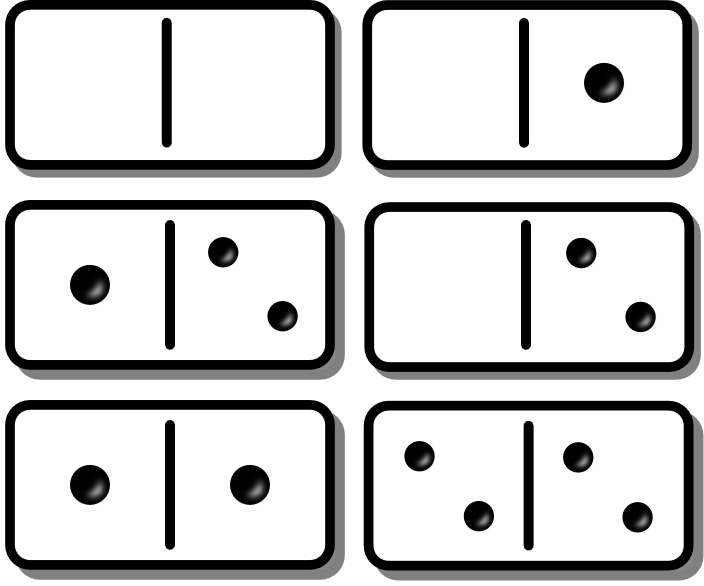
The puzzle seemed straight-forward: just arrange the six lowest-value dominoes into a square where each of the sides add up to the same value. A quick bit of brow-furrowing got me to the value - it has to be four, but actually solving the puzzle was rather trickier. I began to feel rather like the unfortunate contestant, who has also failed to solve the problem - and I had the considerable advantage of not having any time limit (plus I didn't have the other contestants shouting 'often less-than useful' advice at me all the time.
Eventually I found the solution, but it wasn't a very satisfying answer. The reason has to do with the way that I think about dominoes. I spent many of my formative Saturday nights at 'Domino Drives', mainly because my Dad was a seasoned card player who was pretty successful at the accompanying 'Whist Drives', and so transport wasn't a problem. As a result, I think of dominoes as being arranged with ends matching, and doubles rotated through ninety degrees. Now there were some local variations: Up North, where I lived at the time, they played with dominoes that went all the way up to Double Nines, and the One spots were not red, nor were they a different size. White dots all the way from none to nine was what I was brought up with, and it wasn't until many years later that I discover the many variations of domino that existed elsewhere...
Subconsciously, I was applying the 'match the ends' rule as a constraint to this problem. Not rotating the doubles so that they were across the flow wasn't a problem, because I had grown up with players who didn't cross doubles, and there were always people around the table who would 'tut-tut' and rotate any uncrossed double during play. But matching those ends was totally automatic, and so I quickly came up against the problem that wherever you placed the Double Two domino, the two dominoes either side immediately made those two sides add up to more than four!
Eventually it dawned on me that the only way to solve the problem was to ignore my self-imposed constraint and not to match the ends of dominoes. Once you do this, then the solution drops out quite quickly.
But, as frequent readers of this blog will tell you, my head doesn't let me stop there. My mind continuously looks beyond the obvious, and I now realised that actually, not all of the junctions between dominoes broke the rule/constraint - just some of them. Now I already knew that the 'no junctions break the rule/constraint' was not possible, so was it possible to break the rule/constraint at all the junctions?
It seems that you can't do this either. This was my best result, and here all but one of the junctions breaks the rule/constraint.
So, today's observation is that: 'Sometimes you unconsciously impose rules where there aren't any rules at all.' - plus the corollary that: 'breaking constraints sometimes produces interesting results', which gives s revised, and more difficult puzzle:
Can you arrange the six lowest-value dominoes in a square so that the sides all add up to the same number, and with the highest possible number of junctions between dominoes where they have different numbers of dots?
I've always been fascinated by the mixture of mechanics and electronics that you find in toys, and so Pixelh8's first solo exhibition needed little introduction. Titled 'Childhood Remixed', it is all about making sounds with children's toys, and the complete project also includes workshops and talks too.
I attended one of the excellent monthly 'Entrepreneurs On the Move' (EOTM) networking meetings organised by Connected Cambridge this week, and was approached by an MBA student who was intrigued by my description in the attendee notes: I'm one of those unusual individuals who works best at the intersection of technology, creative, and sales/marketing - coming up with innovation, persuasion, strategies, and new combinations / products / solutions for clients, marketing, creatives and developers. I have experience in all of these areas, but most of all, I have experience at utilising them in combination.
Now I would be one of the first to admit that this isn't a normal job description, and so I explained my mental model of entrepreneurship and what I did... As I did so, I was reminded of something that EOTM event organiser Peter Hewkin (the founder of the Centre for Business Innovation ) had said earlier in the evening, which boils down to something like: "Do it once manually, but after that make it happen automatically!" and so I'm publishing my reply so that others can find my explanation. (This is the first of a series of articles covering what I said...)
Here's a Venn diagram that shows the way that I think things work:
So there are the three areas of entrepeneurial/business endeavour that I mentioned: Technology, Creative, and Sales/Marketing, and there's me, in the intersection right at the centre. Technology-wise, I've worked on mechanical and electronic hardware, embedded firmware and a variety of software ranging from medical and industrial applications through telecoms coding, metadata and multimedia to music synthesis and installation art, both by myself and managing programming teams. Creative-wise, I've done photography, photoshopography, vector art, logos, videos, 3D animation and interactive narrative collaborations, again individually and as part of a team. Marketing-wise I've done everything from being a shop-floor salesperson to planning products to convincing clients that a technology was right for their application, once again as an individual and as part of a team.
I've always thought that the interesting parts of any subject are where it meets other disciplines, and so the next diagram looks at what happens in those intersections:
In my mind, the intersection of Technology and Marketing is where Products and Services happen. The mixing of Marketing and Creative is exploited in Advertising. And forcing Creative and Technology together is where Design occurs. Like all models, it isn't perfect, but it helps me to give structure to a complex world.
As part of the process of working in each of the big circles, then I've also worked in those intersections too, and so the diagram makes it very clear why Design is so different from Products - one is primarily a Creative/Technology result, whilst the other is primarily a Marketing/Technology result. But what is really interesting is that the dark intersection at the centre of the diagram is where the hardest and most challenging stuff happens, because here all three disciplines make contributions, and it is here where there are lots of forces pulling me in all directions.
The next diagram tries to show just three of those forces:
Actually, it is good to think of these three arrows as pieces of elastic, because then you can see the importance of the intersection that is opposite to the arrow. So for 'Persuasion', whilst Advertising and the Product or Service is important, it is often the Design that will make the marketing succeed. Apple is a good example of this happening in practice. Equally, Creativity in Design and Advertising is good, but the other end of the 'Inspiration' elastic is the Product or Service, and that really matters! Looking at the way that 'Innovation' is connected to Advertising is a reminder that technology innovations like Flash or HTML may start out as pure technology, but they can rapidly become incorporated as a key part of the Creative and Marketing story.
If we go into the centre of the diagram, then we can start to apply more buzz-words to those vectored forces:
With the diagram acting as a key to strategic thinking, then we've already thought about where Flash and HTML 5 sit - on the Innovation arrow where it meets Advertising. You can also now see that CRM is a way of Designing to Persuade people, and so on. Suddenly 'Zero Touch' is revealed not as just a neat way of using Technology to do the Marketing, but also a topic that requires careful Creative thinking as well as Design and Advertising consideration too!
I use the type of thinking shown in this diagram a lot to help me understand the way that the various parties involved in entrepreneurship and business need to work together. Working from the centre of the diagram, as I do, you need to be able to appreciate the different intersections and the vectored forces that connect them together. By using this model, I've been able to successfully innovate and strategise across the three circles in many ways. To learn more visit my LinkedIn profile, or contact me.
Time is subjective - the apparent rate is related to the density of events. So when there is lots happening, time rushes by, whilst when you are waiting for something to happen, then time can seem to creep by...
This subjectiveness also applies to groupings of time like The Past and The Future. I've deliberately avoided trying to apply any measure of how long 'Now' is because I think that it is normally so fleeting that it is almost just the membrane that separates Past from Future. Of course, if you don't have any significant events, then Now can be used to show the current 'state of the art', but as soon as you get any event, then it immediately becomes The Past.
The other aspect to subjectivity is knowledge and viewpoint. This particularly affects The Future. If you are living on the leading edge of technology, then your Now might be viewed as being The Future by many people who are slightly behind the leading edge. This was highlighted very strongly for me when I read the final report on 'Future Digital Content' that has just been published by the 'Beacons For Innovation' project in the UK's 'Knowledge Transfer Network for the Creative Industries', from the UK Government-funded 'Technology Strategy Board'. If you hadn't heard of the Technology Strategy Board, then their web-site provides this explanation:
The activities of the Technology Strategy Board are jointly supported and funded by BIS and other government departments, the devolved administrations, regional development agencies and research councils.
The 'Future Digital Content' report is very much from the viewpoint of the Creative Industry, and makes interesting reading when you have 'subjectivity' in mind. Much of what it covers as Future seems like Now to me, but then I've spent the last ten years or more looking at the future of content, and so my viewpoint is very skewed. But it is fascinating to see how you can have different views of Now and The Future.
I've always innovated - there's something in the way my brain works that means that I just can't accept something that could be done better. But turning that impatience into entrepreneurial success is hard. I've made hardware add-ons for synthesizers, produced a model-based editor for FM synthesizers, figured out my own way to get 2/3rds of the way towards solving Rubik's cube, suggested some interesting corporate uses for metadata that I can't talk about, and founded a startup company from one of my ideas. But I'm still learning, and there's lots more to do.
One way to see how much there is to do, but also learn ways to get there, is to study people who have gone further. So when I found this article from one of my heroes, I was more than happy to blog it, because it has strong self-analysis, good recommendations, and it tells a fascinating story.
The article is by Nova Spivack, one of the creative thinkers behind Twine (now joined up with Evri) and gives a good insight into how challenging startups can be, but also how rewarding, and maybe it also hints at how addictive they can be...
If you haven't explored Twine, then I encourage you to do so. I'm resisting the temptation the say what it is all about, because I always think that part of the thrill of discovery is not to get a simple soundbite, but to have to try and figure it out yourself. I'm one of those people who has to have a mental model of what something is, how it works, and how it fits into the world. Until I have that, then my mind is feverishly learning, trying to figure it out. Once I've got it sussed, then I use the model to predict, to categorise, to cross-analyse and compare, and more. So I might take slightly longer to get to the 'Aha!' moment, but when I'm there, I'm thinking around the subject and figuring out how it relates to other things.
As you've probably guessed, this isn't very far removed from what Twine, Evri, and Nova are all about too...
Whilst the acrylic CD 'jewel case' has a few design flaws (the easily broken hinge support brackets, and the post-unsurvivable hub grips being just the two major ones), I do like its glossy look, and it feels right. It is so long now since I first tried to open one that I (and I suspect everyone else) have forgotten just how tricky it was to figure out how to open it was at first... But time has a habit of making things familiar, and I'm now thoroughly familiar and very happy with the CD case.
So it's a great pity that in these iTunes/MP3 times, the CD has been largely replaced by the MP3/FLAC/WAV download, although I'm one of those dinosaurs who prefers linear PCM and so whenever possible I buy the CD and then face the storage problems...
DVDs have a similarly ubiquitous, but less glamorous case. The flexible black vinyl ABS case may be tough in the face of abuse (if only the DVD inside was as robust!) but it does look rather utilitarian, and some of the ways that the hub retains the DVD are less than perfect in terms of usability. But again, regular use is a great way to ease acceptance.
However, in my DVD collection I do have something different, and it gives a glimpse of a very different possible future, but sadly, not one that we enjoy on this timeline - a DVD 'jewel case', or more specifically, a 'Super Jewel Box'as it proudly says inside. Yes, it's an overgrown CD jewel case done for DVDs, and I have just the one: for 'Gattaca', an equally individual film/movie. You can see the influence of the CD jewel case - the thickness is just the same, and the tray has the same folded printed sheet, with the cover having a similar folded booklet that kind of slides into place. But the hinge is hugely improved - gone are the thin and all too easily broken brackets, and in their place are much more substantial brackets.
All in all, this is the 'jewel' in the crown of my DVD collection in terms of packaging. The film isn't bad either!
We have all grown up in a world where the unit of TV currency is 'The Programme' and where TV time inexorably moves to the right. You can see it on any EPG: blocks of half an hour or an hour where the future can be seen on the right, and the past is gone forever - unless you recorded it.
It is very easy to assume that this is the natural state of video, and that moving from broadcast TV to online video (on computers or smartphones) is just a case of adapting to a different user interface (mouse or touch screen) and a less casual 'lean forward instead of back' way of viewing.
And the first phase/generation of online players reflects exactly this: YouTube, Hulu, the MSN Video Player, and the BBC's iPlayer all do the obvious by moving TV onto computers or smartphones, adapting the familiar metaphors to the new environment and making catch-up TV something that you can do away from the main TV's large screen and surround sound setup. This works very nicely, and lots of people now watch increasing amounts of video content on computers, laptops, portable mp3/media players, smartphones, etc.
So what happens in the next phase/generation? What is the end-game? I've been thinking about this for more than 10 years, and I've been through research, invention, development, and founded a startup to exploit the ideas and commercialise them. I think that the next phase throws away those two fundamental characteristics of TV: programmes and time. Let's start with an analogy:
Suppose a door-to-door salesperson turns up at your door and instead of trying to talk to you, they hold up a portable DVD player and press the 'Play' button when you open the door. The screen flickers into life and a recorded sales pitch starts up. After about five seconds you know you aren't interested, but the DVD player plays on regardless. On and on. Killing any chance of a sale, and possibly endangering the well-being of the salesperson holding the player too...
It just isn't going to work, is it? The human being is going to be a much better salesperson than the DVD player because they can do two things which the DVD player can't: they can alter the pitch to suit the person who answers the door, and they can add or remove details and emphasis to make the best pitch to that person, based on the conversation, body language and any other feedback. There's no point pushing the virtues of the product to a child's uncomprehending gaze, nor is continuing to speak English when the recipient is talking to you in a different language...
So the next phase/generation does just two things to video: throws away programmes and time. Actually, the two are closely inter-related anyway. Suppose you wanted to catch-up on what has been happening in a soap opera? Would you watch the last few episodes, or would you ask someone who is a fan to tell you what has been happening? What you actually want is probably a few minutes of overview about the major events, mixed with something about your favourite characters or story-lines. A fan can give you exactly that, and the nearest current online, VOD or DVD substitute would be to fast-forward through those programmes, hoping that you can figure out what is happening. You don't need the complete programmes, and you definitely don't need them to play as they were originally made. You need the video to do what the fan does: tell a shortened version of just the highlights of the story that is relevant to your interests.
And that's what Real Time Content's technology does. It turns video content from a single recording of a fixed story, into multiple stories where the duration, the specific storyline, the amount of detail, the rating, the product placement, the references to dates, times and places, the politics, the language, and anything else that you can think of, can be adjusted, in real-time, on-demand. If you want 20 seconds of video content on a specific aspect of home insurance, then that's fine. If you want a news broadcast where science is the top story and there is no sports coverage at all, then that's fine too. If you want a brand reinforcement video where people can view themselves singing karaoke where there are trillions of different versions of the video, then that's okay too.
By taking away programmes and time, what you have is a video delivery technology that creates individual programmes from pre-prepared video clips, on-demand. Radio, DJs and stand-up comedians have been doing this type of thing with different media for years, and now the technology is appearing for video too. Just as stand-up comedians have a rough idea of what they will say in a performance, the actual jokes and stories that get used will depend on the reaction of the audience, and so each performance is different but shares a similar overall flow of story. By having an underlying set of stories that can be told using the video clips, with variations for length, for rating, for product placement, etc, the story that you see can be changed in response to your control, or feedback.
By reading this, you have been infected with an idea. From now on, whenever you watch online video you will want to know why you have to sit through the third recap and the fourth repeat of those flashy motion graphics. You will ask why you can't have just 5 minutes on what that character did in the first half of the season, or why the TV news programme always has to cover all the types of story when you always flick through some sections of a newspaper and read every word in others. You will realise that online video is not all about how many thousands of hours of video are available, but what you can do with that video to make it relevant to your needs, and to your available free time, and not the other way round.
Unfortunately, the cure for this infection is definitely not online video as we know it (or as it is often portrayed: Video On Demand, VOD), but a very different type of online video that is just starting to appear now. In ten years time, be prepared to answer questions like:
'So what was it like when all video was half an hour or an hour long, and there was only one generic un-customised non-personal version that everyone saw?'
I've always been fascinated by the way that change gradually accumulates to the point where you suddenly become aware of it. All of those incremental changes are more or less invisible - right up until the moment that you notice that things are not as you thought.
It can be quite a shock! That favourite short-cut might suddenly become a building-site, or a piece of old software no longer runs after an operating system update and you discover that the web-site no longer exists. In the first example, then the barricade across the road or path will be visible from some distance away, and so you might get some advance warning as you approach, but the software example only surfaces when you actually try to visit the web-site to see if there is a new version to suit the updated operating system.
Now if this was a physics blog, then one possible analogy at this point (and I'll avoid any Sheldon-isms) would be an event horizon - the intangible barrier between places where you can escape from the gravitation attraction of a black hole, and places where you cannot escape. So let's explore this a bit further. In the case of the building site, then you don't know about the fact that your shortcut has gone until you see that your way ahead is blocked. At which point one of those unwritten laws comes into play: "You can't unsee something."
(I tried in vain to find the source of this idea, so if anyone knows, please let me know!)
So this is like the case where one might expect spaceships full of tourists gathered just outside the event horizon of a particularly spectacular black hole... and in these times of protective legislation, I would expect warning signs and 'Police: Do Not Cross' tape all around the event horizon.
But in the case of the web-site, then you normally wouldn't get any advance warning until you actually look for it, which is rather like the distressing result of straying past an unmarked event horizon and discovering that not only can you not unsee it, you can't leave either.
One example that happened to me recently was that I was asked about my work by someone, and I suddenly realised that most of the really detailed analsysis, results, prediction and comment that I have produced over the years are not available publicly. They are owned by the companies that I have worked for, and except for exceptions like patents and conference presentations, they haven't been published in the world outside the company, and even then, the copyright or the Intellectual Property belongs to the company.
If you can find things that I've done, then you can't unsee them, of course. But if you haven't seen them, then there's so much information out there that if you don't know what to look for, then you won't find them by accident. There's a reverse event horizon, and from outside you don't know what I've done.
In fact, we all live inside our own little event horizons, some smaller than others. Some larger than others - like Barrack Obama!
My own personal event horizon is quite peculiar. If you search online for my name you get references to my book on sound synthesis, but you will also find lots of other Martin Russes - like one who wrote about the Korean War. And you will find even more references to Russ Martin! Of course, most online searches get progressively worse as you go back in time to before blogs, before html, and before the Internet, which is another event horizon effect.
I'm afraid that now you know the analogy, it is hard to unknow it!
Some time ago I discovered Spaces, the Virtual Desktop utility that comes with Mac OSX. It took a while to get used to the extra step of switching desktops instead of juggling with bringing windows to the top, but once I'd got the hang of it, then I wondered how I'd ever managed when I had a single over-crowded screen. As switching between desktops has become second nature, I've begun to wonder if there are any ways to extend the ease of use and immediacy any further...
One thought was to replace the keyboard key-press with a mouse click, but I used to use a three button mouse when I used Unix, and my fingers are happier with just a couple of choices. Squeezing a mouse feels wrong to me, too. The finger-gestures on the new AppleMagic Mouse might be a way forward, and I'll check that the next time I'm in an Apple Store (or find someone with a Magic Mouse - I've always found that talking with another user is a good way to shortcut the learning cycle).
But it turns out that there are a few software solutions that make virtual desktops easier to use, so here's a few things to consider.
- Dockland Soft'sSpacesuit is a free utility that allows you to have different wallpapers for each desktop, so you get immediate visual feedback as you change desktop. But Dockland are into more than just extra wallpaper - Fantastik is a neat 'window preview' switcher system that offers an alternative way to sort out multiple windows.
- The CocoaBots' Hyperspaces is an alternative wallpaper-per-space utility that also allows you to colorize/tint one background image differently for each desktop.
- Once you start looking for alternative wallpapers for desktops, then you also find utilities that extend the basic Finder functionality. One example is Conjure 3 from Conjurebunny. Another (early beta) example is here.
There seems to be an evolution in progress here. Multi-touch tables, Magic Mouse, and iPhone seem to be influencing people to increase the tactile aspects of screens, and it seems to be leading to something of which we are only seeing glimpses so far. I'm reminded of other 3D-influenced utilities like the Cooliris image browser, and I also remember previous bursts of 'user interface' innovation activity like the transition from the one-app-at-once Finder via the Switcher to the many-apps-at-once MultiFinder and alternatives like the Slave beta from (I think) Steve Capps...
What I'm certain of is that there's plenty of things to explore in this area, and that having a different wallpaper for each virtual desktop is only the beginning.
You may have seen the news about the failure of epic proportions by Eurostar last night that is continuing into today (Saturday 19th December), which is rapidly turning into a PR disaster for the train operator. But the news media are concentrating on the experience of the passengers, so I thought I would give the story from the viewpoint of a parent of a young adult on the train.
In these days of digital connectedness (something which Eurostar, their web-site, their Twitter feed, their PR company, and presumably the duty manager with the mobile phone seem to have missed out on) you feel very connected. So at 21:50 last night we knew that the 9059 Eurostar from Gare du Nord in Paris was 'waiting to enter the tunnel' after already being delayed leaving Paris. Then we heard nothing. After half an hour then the train should have been through the tunnel. Mobile phone and texts (SMS) got no reply, which suggested either the train was still inside the tunnel, or mobile telephony had failed in Kent, and given the way that even a slight bit of snow in the UK causes total chaos, this didn't seem very unlikely!
Just out of curiosity, I had a look at Twitter, and discovered the #Eurostar tag was already buzzing with people asking about what was happening? It seems that people at St. Pancras were not getting any useful information, and the train ahead of the 9059 had not arrived. As usual, Twitter was several hours ahead of any news services, and the web-sites of Eurostar (ridiculously jolly at a time of crisis, but then this was true right through to the middle of the following day - thank goodness for spin and positive PR in an emergency), National Rail, Eurotunnel (who did eventually put some information on their web-site! - a few hours into Saturday morning, hours after it had first broken on Twitter), or the BBC News web-site (the BBC were late catching up, obviously were not watching Twitter, and I left a hot-line message and an email telling them to watch Twitter for some breaking news!) were blissfully ignorant of the developing crisis until several hours had passed an we were into Saturday morning. The one shining light on Twitter was Ali Bunkall, a reporter from Sky News, who used Twitter to convey much needed information to worried and concerned relatives - full marks to Sky News, Big fails to everyone else who were obviously sleeping and unaware.
So there we were, approaching midnight, no news from the train, and wondering what was happening. So I tried enquiring by phone from info on the Internet and Teletext. I'm always struck by the way that companies are determined to stop you contacting them by phone, and even when you do get a number, then you get put in a queue that tells you they value your call, etc. etc. Eurostar's number was wierd: the number on Teletext had a recorded announcement saying that the number had changed. Phoning the new number got through to another recorded announcement that gleefully informed me that this was outside of working hours, and that I should call back when they were open. Now Eurostar may have been closed for its office staff, but it was still operating trains, and so they were not 'closed for business', they were operational. An operational company should be contactable, or should present up-to-date information on the web, or by Twitter, or by recoded announcements on a telephone line. How about an emergency telephone number? For this kind of emergency? Have they thought about crisis management with all those millions of euros in investment?
So then I tried National Rail enquiries. Seemed like a good idea. But it wasn't. The person I spoke to stone-walled me totally. They commented that they had had several enquiries about Eurostar, and suggested that I contact Eurostar. When told that the number was 'out of hours, please ring in working hours', they claimed that they had no way of contacting the operational part of Eurostar. So I asked for the supervisor, explained the situation, and was told that they had no way to contact an operating train company, plus the train was not in the UK, it was in the tunnel. So I asked for their supervisor, and got passed back to the first person. I suggested that there must be a way to contact the people at Eurostar who were operating the trains and was told that this was not possible. So I then asked how I could complain at the total and complete lack of help that they had provided, asking them if the conversation had been recorded ("yes") and was told that I could not complain because it was nothing to do with them - it was with Eurostar and a train that was not technically 'in the UK'. National Rail enquiries could not have been less helpful, and they join the growing list of casualties from above.
Next was 999, which got us to more 'no current information', presumably because they weren't watching Twitter! But they did say they would try to find out and ring us back. Which they did. Full marks to Suffolk Police who were totally brilliant. Apparently it IS possible to talk to the operational part of Eurostar, but National Rail enquiries will not let members of the public do it, you have to go via the emergency services. So finally we discovered, via an official route, that trains were stuck in the Channel Tunnel. Of course, we already suspected this via Twitter, but it was good to have it confirmed.
And so it went on. Sky News man Ali Bunkall had best info via Twitter, web-sites zero, TV news gradually catching on to a major story so that at 3 am they had a Eurostar 'spokesperson' on who blamed the cold weather, said that there had been 'no causalties' ... 'at the moment' and generally did very little to reassure worried/frantic parents/relatives. A few hours later a different and more 'spin-prepared' spokesperson was presenting a rather more carefully worded and neutral position, again blaming the weather.
Finally, just after 4 am, after about 5 hours of very little information (and most of that from Twitter and not from conventional 'News' services) we got phoned from the 9059 train, which was now out of the tunnel... but this was only the beginning...
I lived through the infamous move of 'The X-Files' from BBC2 to BBC1, where allegedly no two episodes were on at the same time or day ever again, and viewing figures plummeted (allegedly).
So I'm intrigued to see that Defying Gravity, the already-cancelled-after-the-first-season TV show (Firefly, anyone?), partly funded with the money from my TV licence by the BBC, is moving around in exactly the same way. The opening was promising: Pilot and first episode on back-to back, on a Thursday night on BBC2, and this almost seemed to be a stable location, until after only a few episodes it was moved to Saturday night, and then moved to a later slot, and next week, to an even later slot. It is an old and tired game - find the moving programme, and I'm not impressed. Worse, after a slow start, Defying Gravity is starting to get better as it goes along, and is rapidly becoming a must-watch.
Just as an experiment, I'd like EastEnders and Coronation Street to be moved around in the schedules every episode the way some other programmes are...
Update: 7th December 2009.
The usual pattern continues. This weekend there was no episode of Defying Gravity at all, but there will be next weekend. So here's the pattern:
TV Scheduling's tricks, twists and turns...
First, show the pilot and first episode back to back.
Second, show a few episodes at the same time and on the same day as the pilot.
Then, move it to another day and time.
Then, move it later on that day, and then later, and then later. Make sure that any sporting, political or other event that occurs is used as an excuse to move an episode with no warning, or better, to defer showing that episode until after the whole series has ended (if at all).
Then don't show it at all one weekend, but make sure that you repeat some previous episodes twice, again on movable times and days.
Then show two episodes back to back, so that anyone who misses them loses out big-time and has a lot of catching up to do.
Then wait a few weeks and show the last two episodes back to back when there's something major on at least two other channels.
Finally, make sure you don't repeat the last two episodes, ever...


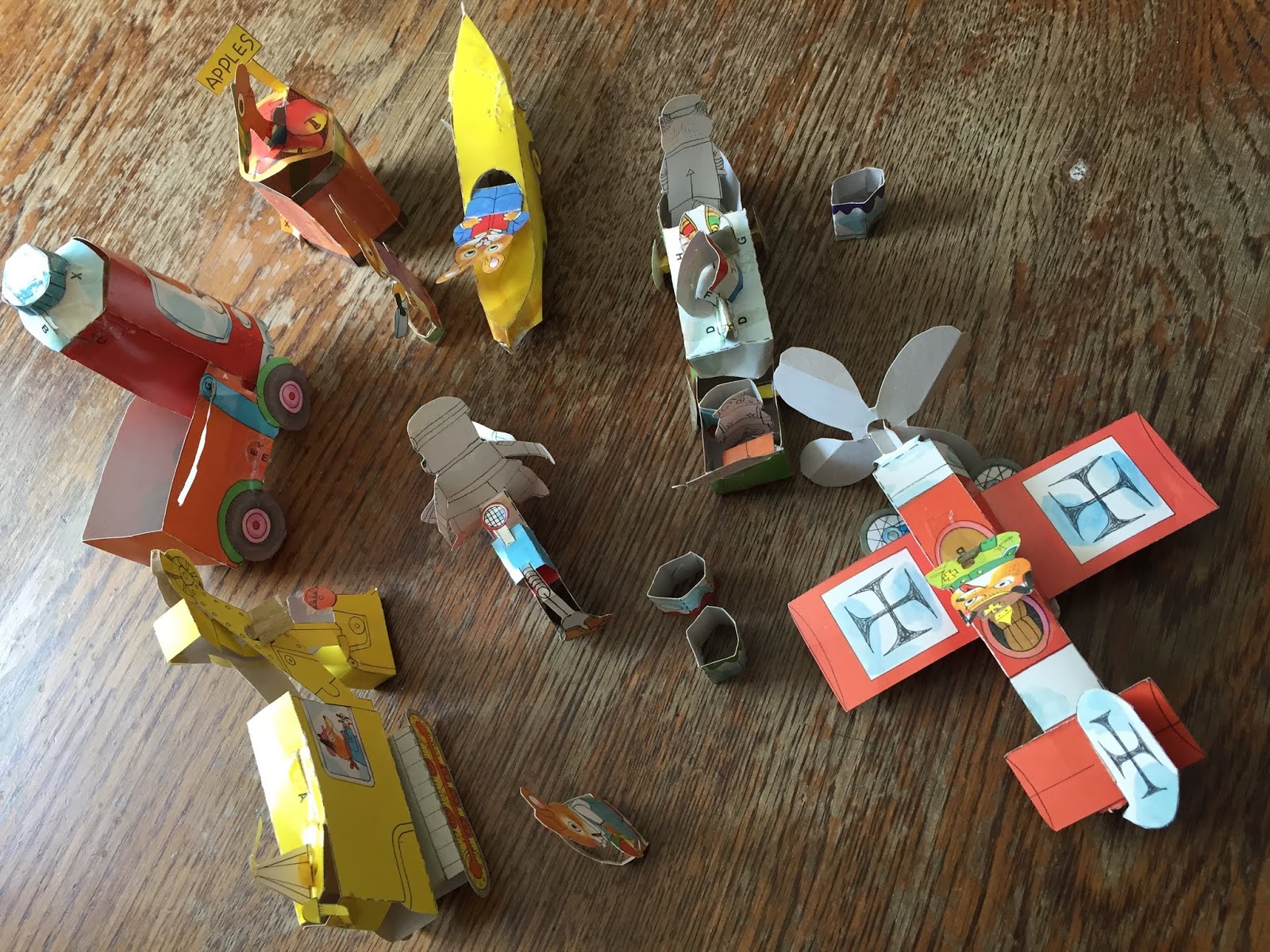


 Image via Wikipedia
 Image by Tetramesh via Flickr


![Reblog this post [with Zemanta]](https://lh3.googleusercontent.com/blogger_img_proxy/AEn0k_tOqkv_2MQfftyvYsRe6uBto-jg60JW0ICtxzAzJeHAKpRIIoenBAfptZdc6GCno7SblglwMY1KscxuUaNX81IvHI68mxd53cNvP4F9b_NMJWx5m_JGYyxc3zWF3W1iH_F21l6VQLiXzBfi3E-jglc=s0-d)


![Reblog this post [with Zemanta]](https://lh3.googleusercontent.com/blogger_img_proxy/AEn0k_ujpgx8x2-K7BqAaG3JhbPPu990CxARSBgaJd8l-tuvZT6_ey5n46W3BGS8JSMhPoa9SKLC3Da5VlePolQKXSnR17p1epdxqJM_rm688MkKEEYtcXHqGIrzWPZzjTB5hGiw8h2UuFi0capXx3IAZWj7=s0-d)

![Reblog this post [with Zemanta]](https://lh3.googleusercontent.com/blogger_img_proxy/AEn0k_tggcaHS9crrv9nYq4PD_US9X06snKpvw8uH405MwG6ocpRXIDpsdkCwb5uD9trffr-wFnEJp4XHPRHDVRYvGMsHsge46x-MyLUM-NnkazmoyfVyVeMjUQcGlfS20iH6ANFGxwQDXZoy77qo9Q2MUs=s0-d)

![Reblog this post [with Zemanta]](https://lh3.googleusercontent.com/blogger_img_proxy/AEn0k_v7o6S2BUQezPwK6rfgXlkxRGZnoaq2dg4ArPH34hX3j5t1toWpDGi7PVsPNwlfdoWmdO4jthE5WNc-eJSLkjKLOxbJzTwvntCapMbRQ9-jKTb_7xMxdVmtQN0N1_Vw6pcO2yLH1wuaMcli73Hm-hbr=s0-d)


![Reblog this post [with Zemanta]](https://lh3.googleusercontent.com/blogger_img_proxy/AEn0k_uFD9gtngrem1GGcglwO8g1a7wahe33HOaE3gwoWAXkUugwvQwdElvELJE9MVbFelnxMODCnEtBCsr1iXJSgSCJGqBoqokC-vSPcjAhcwjYZpvj24QnL5_CnjhZ9A-BlDSLXqUwOPUbBL2DQwB7FnF5=s0-d)

![Reblog this post [with Zemanta]](https://lh3.googleusercontent.com/blogger_img_proxy/AEn0k_sAr-TIsV-QAGQ9F308ZpnTLu6JZWSe19viefQF-k5VDGgwg-DqhuH2k7f-TuxLVxQNs4nbimm52VSBpU5Ord3jtLsB2oWhwxZ5nelPd_VVogkv_Lfo_nfZnQN2yc6Bz4NjPEjWosTuAq55vyohl1E=s0-d)
 So this is like the case where one might expect spaceships full of tourists gathered just outside the event horizon of a particularly spectacular black hole... and in these times of protective legislation, I would expect warning signs and 'Police: Do Not Cross' tape all around the event horizon.
![Reblog this post [with Zemanta]](https://lh3.googleusercontent.com/blogger_img_proxy/AEn0k_vvZBdGf2An8Ev8KrbnZpls0M9jgAgwHu1B3dOsiCEano_Kifn1rJjC-A4KBut5nMS569Y6Rlayy540iSd3fKJ60BbhPDmo9g9DX2r6PTKtKxeTF9Ax-_2w59aZmI_ZdtQyUSTZprzRWig7ZrKxhElM=s0-d)

![Reblog this post [with Zemanta]](https://lh3.googleusercontent.com/blogger_img_proxy/AEn0k_tRxW81V-caR19rk-Etl4iF71LPC5IqnCDID9JwF0PmRX2zeSFNhgclsPJ7eDuBF_rcTw5GVeP-8hIglCUCzUbLg7kCbPgaadWsxthPOlSPwwqlrCS7noJg_SQO9S39j0VpXu1TR45ZzOT2gRyaMLHF=s0-d)
![Reblog this post [with Zemanta]](https://lh3.googleusercontent.com/blogger_img_proxy/AEn0k_uXesr0szx1m-w-T7U3bw6x42f1kdAxANNPKKXdiCy-kHWJY1JU7RjPeccIbpByKn8pT9Uqr5b5UNdx8ip92AQyrpxp9Xm2eq6-DMT8cQ2np8srih9oSyR_lThQ0yWWpLh3gR6WJYl8pdtkTvhwQwrU=s0-d)

![Reblog this post [with Zemanta]](https://lh3.googleusercontent.com/blogger_img_proxy/AEn0k_sev_rsi5YCMAA-rL6Br8h4riOjeSNJ2xF0z1klJC5kEm9siaNonzp4mvTkEiLQji30IL3QVbEY5zvHQ_cTPXEq2QvOJuinAmGk59MEtao8qAujXXEgDN920SR0w_Pb6x5AG4gtPA2P7lR4cFcghcA=s0-d)

 Posts
Posts