Saturday, 27 February 2010

Information event horizons

I've always been fascinated by the way that change gradually accumulates to the point where you suddenly become aware of it. All of those incremental changes are more or less invisible - right up until the moment that you notice that things are not as you thought.

It can be quite a shock! That favourite short-cut might suddenly become a building-site, or a piece of old software no longer runs after an operating system update and you discover that the web-site no longer exists. In the first example, then the barricade across the road or path will be visible from some distance away, and so you might get some advance warning as you approach, but the software example only surfaces when you actually try to visit the web-site to see if there is a new version to suit the updated operating system.

Now if this was a physics blog, then one possible analogy at this point (and I'll avoid any Sheldon-isms) would be an event horizon - the intangible barrier between places where you can escape from the gravitation attraction of a black hole, and places where you cannot escape. So let's explore this a bit further. In the case of the building site, then you don't know about the fact that your shortcut has gone until you see that your way ahead is blocked. At which point one of those unwritten laws comes into play:

"You can't unsee something."


(I tried in vain to find the source of this idea, so if anyone knows, please let me know!)

So this is like the case where one might expect spaceships full of tourists gathered just outside the event horizon of a particularly spectacular black hole... and in these times of protective legislation, I would expect warning signs and 'Police: Do Not Cross' tape all around the event horizon.

But in the case of the web-site, then you normally wouldn't get any advance warning until you actually look for it, which is rather like the distressing result of straying past an unmarked event horizon and discovering that not only can you not unsee it, you can't leave either.

One example that happened to me recently was that I was asked about my work by someone, and I suddenly realised that most of the really detailed analsysis, results, prediction and comment that I have produced over the years are not available publicly. They are owned by the companies that I have worked for, and except for exceptions like patents and conference presentations, they haven't been published in the world outside the company, and even then, the copyright or the Intellectual Property belongs to the company.

If you can find things that I've done, then you can't unsee them, of course. But if you haven't seen them, then there's so much information out there that if you don't know what to look for, then you won't find them by accident. There's a reverse event horizon, and from outside you don't know what I've done.

In fact, we all live inside our own little event horizons, some smaller than others. Some larger than others - like Barrack Obama!

My own personal event horizon is quite peculiar. If you search online for my name you get references to my book on sound synthesis, but you will also find lots of other Martin Russes - like one who wrote about the Korean War. And you will find even more references to Russ Martin! Of course, most online searches get progressively worse as you go back in time to before blogs, before html, and before the Internet, which is another event horizon effect.

I'm afraid that now you know the analogy, it is hard to unknow it!


Reblog this post [with Zemanta]

Thursday, 31 December 2009

Spacepaper


Some time ago I discovered Spaces, the Virtual Desktop utility that comes with Mac OSX. It took a while to get used to the extra step of switching desktops instead of juggling with bringing windows to the top, but once I'd got the hang of it, then I wondered how I'd ever managed when I had a single over-crowded screen. As switching between desktops has become second nature, I've begun to wonder if there are any ways to extend the ease of use and immediacy any further...

One thought was to replace the keyboard key-press with a mouse click, but I used to use a three button mouse when I used Unix, and my fingers are happier with just a couple of choices. Squeezing a mouse feels wrong to me, too. The finger-gestures on the new Apple Magic Mouse might be a way forward, and I'll check that the next time I'm in an Apple Store (or find someone with a Magic Mouse - I've always found that talking with another user is a good way to shortcut the learning cycle).

But it turns out that there are a few software solutions that make virtual desktops easier to use, so here's a few things to consider.

- Dockland Soft's Spacesuit is a free utility that allows you to have different wallpapers for each desktop, so you get immediate visual feedback as you change desktop. But Dockland are into more than just extra wallpaper - Fantastik is a neat 'window preview' switcher system that offers an alternative way to sort out multiple windows.

- The CocoaBots' Hyperspaces is an alternative wallpaper-per-space utility that also allows you to colorize/tint one background image differently for each desktop.

- Once you start looking for alternative wallpapers for desktops, then you also find utilities that extend the basic Finder functionality. One example is Conjure 3 from Conjurebunny. Another (early beta) example is here.

There seems to be an evolution in progress here. Multi-touch tables, Magic Mouse, and iPhone seem to be influencing people to increase the tactile aspects of screens, and it seems to be leading to something of which we are only seeing glimpses so far. I'm reminded of other 3D-influenced utilities like the Cooliris image browser, and I also remember previous bursts of 'user interface' innovation activity like the transition from the one-app-at-once Finder via the Switcher to the many-apps-at-once MultiFinder and alternatives like the Slave beta from (I think) Steve Capps...

What I'm certain of is that there's plenty of things to explore in this area, and that having a different wallpaper for each virtual desktop is only the beginning.


Reblog this post [with Zemanta]

Saturday, 19 December 2009

Eurostar Fail - A Relative's Experience

You may have seen the news about the failure of epic proportions by Eurostar last night that is continuing into today (Saturday 19th December), which is rapidly turning into a PR disaster for the train operator. But the news media are concentrating on the experience of the passengers, so I thought I would give the story from the viewpoint of a parent of a young adult on the train.

In these days of digital connectedness (something which Eurostar, their web-site, their Twitter feed, their PR company, and presumably the duty manager with the mobile phone seem to have missed out on) you feel very connected. So at 21:50 last night we knew that the 9059 Eurostar from Gare du Nord in Paris was 'waiting to enter the tunnel' after already being delayed leaving Paris. Then we heard nothing. After half an hour then the train should have been through the tunnel. Mobile phone and texts (SMS) got no reply, which suggested either the train was still inside the tunnel, or mobile telephony had failed in Kent, and given the way that even a slight bit of snow in the UK causes total chaos, this didn't seem very unlikely!

Just out of curiosity, I had a look at Twitter, and discovered the #Eurostar tag was already buzzing with people asking about what was happening? It seems that people at St. Pancras were not getting any useful information, and the train ahead of the 9059 had not arrived. As usual, Twitter was several hours ahead of any news services, and the web-sites of Eurostar (ridiculously jolly at a time of crisis, but then this was true right through to the middle of the following day - thank goodness for spin and positive PR in an emergency), National Rail, Eurotunnel (who did eventually put some information on their web-site! - a few hours into Saturday morning, hours after it had first broken on Twitter), or the BBC News web-site (the BBC were late catching up, obviously were not watching Twitter, and I left a hot-line message and an email telling them to watch Twitter for some breaking news!) were blissfully ignorant of the developing crisis until several hours had passed an we were into Saturday morning. The one shining light on Twitter was Ali Bunkall, a reporter from Sky News, who used Twitter to convey much needed information to worried and concerned relatives - full marks to Sky News, Big fails to everyone else who were obviously sleeping and unaware.

So there we were, approaching midnight, no news from the train, and wondering what was happening. So I tried enquiring by phone from info on the Internet and Teletext. I'm always struck by the way that companies are determined to stop you contacting them by phone, and even when you do get a number, then you get put in a queue that tells you they value your call, etc. etc. Eurostar's number was wierd: the number on Teletext had a recorded announcement saying that the number had changed. Phoning the new number got through to another recorded announcement that gleefully informed me that this was outside of working hours, and that I should call back when they were open. Now Eurostar may have been closed for its office staff, but it was still operating trains, and so they were not 'closed for business', they were operational. An operational company should be contactable, or should present up-to-date information on the web, or by Twitter, or by recoded announcements on a telephone line. How about an emergency telephone number? For this kind of emergency? Have they thought about crisis management with all those millions of euros in investment?

So then I tried National Rail enquiries. Seemed like a good idea. But it wasn't. The person I spoke to stone-walled me totally. They commented that they had had several enquiries about Eurostar, and suggested that I contact Eurostar. When told that the number was 'out of hours, please ring in working hours', they claimed that they had no way of contacting the operational part of Eurostar. So I asked for the supervisor, explained the situation, and was told that they had no way to contact an operating train company, plus the train was not in the UK, it was in the tunnel. So I asked for their supervisor, and got passed back to the first person. I suggested that there must be a way to contact the people at Eurostar who were operating the trains and was told that this was not possible. So I then asked how I could complain at the total and complete lack of help that they had provided, asking them if the conversation had been recorded ("yes") and was told that I could not complain because it was nothing to do with them - it was with Eurostar and a train that was not technically 'in the UK'. National Rail enquiries could not have been less helpful, and they join the growing list of casualties from above.

Next was 999, which got us to more 'no current information', presumably because they weren't watching Twitter! But they did say they would try to find out and ring us back. Which they did. Full marks to Suffolk Police who were totally brilliant. Apparently it IS possible to talk to the operational part of Eurostar, but National Rail enquiries will not let members of the public do it, you have to go via the emergency services. So finally we discovered, via an official route, that trains were stuck in the Channel Tunnel. Of course, we already suspected this via Twitter, but it was good to have it confirmed.

And so it went on. Sky News man Ali Bunkall had best info via Twitter, web-sites zero, TV news gradually catching on to a major story so that at 3 am they had a Eurostar 'spokesperson' on who blamed the cold weather, said that there had been 'no causalties' ... 'at the moment' and generally did very little to reassure worried/frantic parents/relatives. A few hours later a different and more 'spin-prepared' spokesperson was presenting a rather more carefully worded and neutral position, again blaming the weather.

Finally, just after 4 am, after about 5 hours of very little information (and most of that from Twitter and not from conventional 'News' services) we got phoned from the 9059 train, which was now out of the tunnel... but this was only the beginning...


Reblog this post [with Zemanta]

Sunday, 22 November 2009

Watch Me If You Can!


I lived through the infamous move of 'The X-Files' from BBC2 to BBC1, where allegedly no two episodes were on at the same time or day ever again, and viewing figures plummeted (allegedly).

So I'm intrigued to see that Defying Gravity, the already-cancelled-after-the-first-season TV show (Firefly, anyone?), partly funded with the money from my TV licence by the BBC, is moving around in exactly the same way. The opening was promising: Pilot and first episode on back-to back, on a Thursday night on BBC2, and this almost seemed to be a stable location, until after only a few episodes it was moved to Saturday night, and then moved to a later slot, and next week, to an even later slot. It is an old and tired game - find the moving programme, and I'm not impressed. Worse, after a slow start, Defying Gravity is starting to get better as it goes along, and is rapidly becoming a must-watch.

Just as an experiment, I'd like EastEnders and Coronation Street to be moved around in the schedules every episode the way some other programmes are...

Update: 7th December 2009.

The usual pattern continues. This weekend there was no episode of Defying Gravity at all, but there will be next weekend. So here's the pattern:

TV Scheduling's tricks, twists and turns...

  • First, show the pilot and first episode back to back.
  • Second, show a few episodes at the same time and on the same day as the pilot.
  • Then, move it to another day and time.
  • Then, move it later on that day, and then later, and then later. Make sure that any sporting, political or other event that occurs is used as an excuse to move an episode with no warning, or better, to defer showing that episode until after the whole series has ended (if at all).
  • Then don't show it at all one weekend, but make sure that you repeat some previous episodes twice, again on movable times and days.
  • Then show two episodes back to back, so that anyone who misses them loses out big-time and has a lot of catching up to do.
  • Then wait a few weeks and show the last two episodes back to back when there's something major on at least two other channels.
  • Finally, make sure you don't repeat the last two episodes, ever...

If this was a tv programme it would be a comedy!


Reblog this post [with Zemanta]

Monday, 16 November 2009

Films Half-Remembered

As I get older, my memory seems to be morphing/degrading/evolving(?)/improving(?) into a turbulent combination of 'fast and accurate' as I've always known it, mixed with annoyingly flaky 'near-recollections' where I can almost get to the thing I'm thinking of (sometimes so close I can almost taste it, almost have it on the tip of my tongue ready to say...), but it doesn't and won't quite resolve to the actual name.

With this in mind, here is where I'm going to collect things that flash into my head that fit into this category. You'll see what I mean when you see the examples:

Films/Movies Half-Remembered

The Men Who Glare at Stoats
<=> The Men Who Stare at Goats
The Fifth Elephant <=> The Fifth Element
Robin Hood: Prints of Thebes (Dirty postcards, anyone?) <=> Robin Hood: Prince of Thieves
Willow, the presumed Buffy spin-off that curiously seems to have no obvious connection with anything in the Buffy canon...
The Bourne Something Else <=> Identity, Supremacy, Ultimatum
Blend It With Beckham (presumably a product endorsement TV cookery show!) <=> Bend It Like Beckham

Bands/Groups/'Popular Beat Combos' Half-Remembered

The Dixie Dregs <=> The Dixie Chicks (both exist!)
Boomerang, currently wowing them on their 11th come-back tour!
Dromedary, 70s prog rock band noted for long guitar solos.
The Dreadful Grate <=> The Grateful Dead

Jokes That Need More Work

What colour are car-keys? A brown/green colour (Khaki!)

As always, I'll add to the list when I can, so until then, I'll apologise for its brevity, but I hope that there's a least a smile in there already!


Reblog this post [with Zemanta]

Sunday, 15 November 2009

Is car-jacking a gender issue?

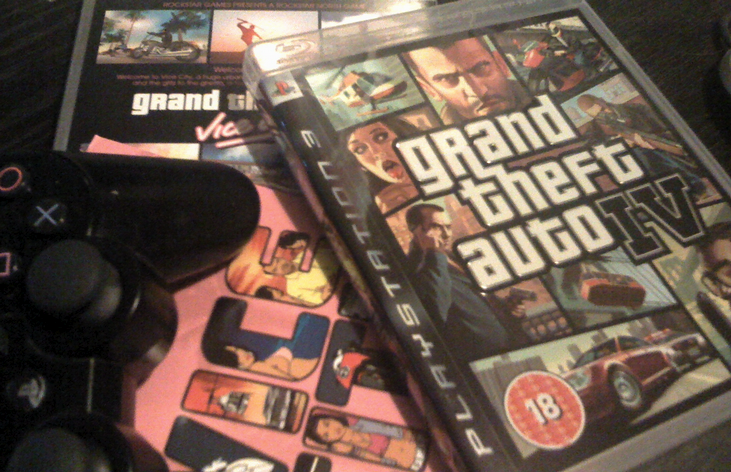
In the Grand Theft Auto video game, one of the many modes of transport is freely available in most parts of the game space - cars (obviously, if you are swimming around in the water then there are fewer cars, but...). Getting a car is very straight forward - you stand in front of a car, or approach one stopped at traffic lights, open the door and pull the driver out, then take their place and drive off. And so car-jacking just gets added to the list of crimes that you can carry out in this game ...

What's curious is that the ease of car-jacking in GTA seems to be spreading into the real world -well, at least, the unreal world of music videos. In the recent Robbie Williams 'Bodies' single release that starts off with a brilliant dance bass-line (via Trevor Horn, no less) and then goes in a different direction (balladic, no less), there's a scene where a woman with sunglasses turns up in a beach buggy (aka a dune buggy) and slows down to a stop, seemingly to offer the strolling Robbie a lift. In a striking piece of editing, one minute the woman is smiling at Robbie from the driver's seat, the next moment Robbie has vaulted in and is driving the beach buggy with the woman with sunglasses magically transported to the passenger seat. It happens so fast and so smoothly that I had to watch it again to make sure I was seeing things correctly. Magic!

(check your eyes here)

Now, I'm rather unfamiliar with the type of lift offering where the person you offer the lift to then drives the car, but it seems rather peculiar to me, especially when the woman continues to smile throughout as if giving your car to a perfect stranger was the most natural thing in the world. Of course, I'm sure that Robbie's PR people have a perfectly reasonable back-story that explains why this is totally explainable and not how it might appear, but then I'm sure that the Rockstar Games PR people have equally good explanations for the 'car-loan' scheme alternative that occurs in GTA as well.

It's a good thing that video games and music videos are not meant to accurately represent the real world, where people of both genders can drive cars without their major concern being the fear of someone arbitrarily taking over the task without warning. The truly remarkable thing is the title of the album from which the music video track is taken: Reality Killed the Video Star. In this case, the reality seems curiously lacking for one video star...

Reblog this post [with Zemanta]

Tuesday, 13 October 2009

Informed and critical

Surfing in Hawaii. A photograph of Kris Burmei...Image via Wikipedia

My kids continually amaze me with their internet-enabled awareness. A few recent instances of this show some interesting trends that affect how content providers should be thinking about making new content.

'It's like...'

My kids surf any available TV channels, looking for ones to watch (for about 5 seconds or less before flicking to another channel) AND ones to avoid (which are then studiously ignored forever, scorned and derided - you don't want to be on their 'tell everyone this channel is (insert current term of low esteem)' list). But their surfing is informed by their internet surfing - the internet is their source of pointers and critical thinking from their peers.

So 'How I met your Mother' is described as being 'Like 'Friends', but everyone is Ross'. Which is partly innate knowledge from years of watching repeats/reruns of Friends, and partly opinion from the internet: 'everyone says...'.

More surprising was the comment from my son about 'Being Erica', which is apparently 'like Quantum Leap'. Now this is more interesting because it is a late 80s / early 90s TV programme that hasn't been repeated/rerun in his lifetime... It turns out that my complete set of QL DVDs haven't gone unnoticed, but the internet acted as reinforcement.

So it may be no longer possible to recycle old media ideas and formats, secure in the knowledge that people will have forgotten the old version. My kids are very aware, and very scathing about re-use of ideas, unless, as with 'Being Erica' there is sufficient effort visibly expended in building on the old idea. So 'Heroes' was abandoned by my kids when they realised that once you have people who can do anything, anything can happen, and there's no consistency of storyline, explanations can be overturned, etc. Superhero stories work because of the limitations of the characters, not their powers, and with infinite possibilities comes infinite boredom and lack of motiviation to stay interested.

Finally, there's big categorisations - like 'Jennifer Aniston Movies', which I didn't think of as a genre, but which is increasingly mentioned in the same breath as 'What have they done since Friends?'. A youth that is connected and informed, and critical - maybe there is hope for humankind!


Reblog this post [with Zemanta]